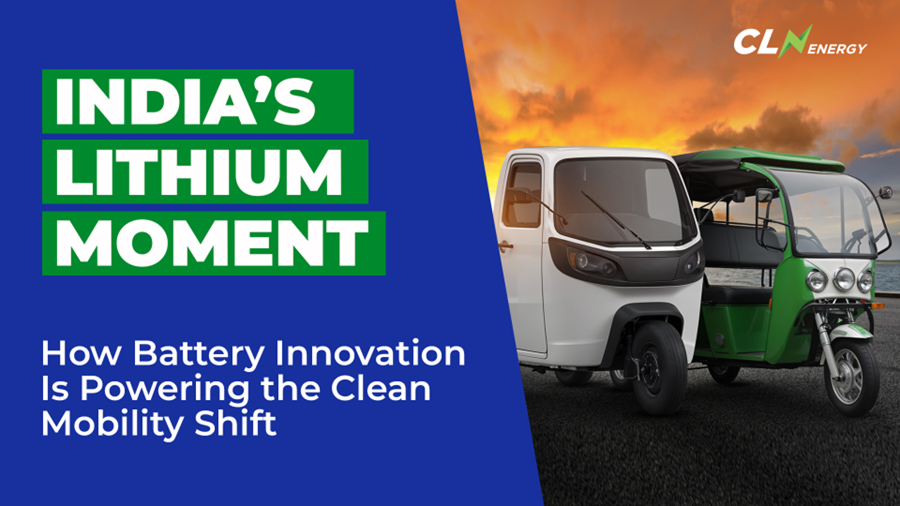
CLN Energy manufactures lithium iron phosphate (LiFePO4) battery packs for e-rickshaws and e-autos at its own plant in Noida — 51.2V, 60.8V and 64V, from 105Ah to 200Ah. Packs carry a 36-month warranty. The same line covers two-wheelers, e-loaders, golf carts and material handling equipment.
By CLN Energy Limited BSE SME listed, scrip 544347 Lithium battery manufacturer, Noida Reviewed
The whole range, by vehicle class. Every pack is LiFePO4 with a 36-month warranty; what changes between them is voltage and capacity. Each e-rickshaw model, with its full specification sheet, is on the e-rickshaw lithium battery page.
| Pack | Voltage | Capacity | Nominal energy | Chemistry |
|---|---|---|---|---|
| Lithium-ion batteries 51.2V 105Ah | 51.2 V | 105 Ah | 5.4 kWh | LiFePO4 |
| Lithium-ion batteries 51.2V 125Ah | 51.2 V | 125 Ah | 6.4 kWh | LiFePO4 |
| Lithium-ion batteries 51.2V 140Ah | 51.2 V | 140 Ah | 7.2 kWh | LiFePO4 |
| Lithium-ion batteries 51.2V 150Ah | 51.2 V | 150 Ah | 7.7 kWh | LiFePO4 |
| Lithium-ion batteries 60.8V 105Ah | 60.8 V | 105 Ah | 6.4 kWh | LiFePO4 |
| Lithium-ion batteries 64V 105Ah | 64 V | 105 Ah | 6.7 kWh | LiFePO4 |
| Lithium-ion batteries 64V 140Ah | 64 V | 140 Ah | 9.0 kWh | LiFePO4 |
| Pack | Voltage | Capacity | Nominal energy | Chemistry |
|---|---|---|---|---|
| E-Auto Batteries 51.2V 200Ah | 51.2 V | 200 Ah | 10.2 kWh | LiFePO4 |
| E-Auto Batteries 60.8V 200Ah | 60.8 V | 200 Ah | 12.2 kWh | LiFePO4 |
This is the question that causes the most confusion when someone moves from lead-acid, so it is worth being exact. A lithium iron phosphate cell is 3.2V nominal, so packs come in multiples of it: sixteen cells give 51.2V, nineteen give 60.8V, and twenty give 64V. A 48V lead-acid set is four 12V blocks, and its lithium replacement is the 51.2V pack — so if you are searching for a 48V e-rickshaw battery, the 51.2V range is what you want. Likewise a 60V system maps to 60.8V. The numbers differ because the chemistry differs, not because the packs are a different size.
For every 48V and 51.2V pack across telecom, storage, material handling and e-mobility in one place, see the 48V lithium battery page.
The same e-mobility line runs across the light electric vehicle range. E-loaders sit on the L3 three-wheeler platform and are built from the same packs as the e-rickshaw range.
Send the make, model and year and we will confirm it rather than estimate. We are asked most often about the common three-wheelers — Bajaj, Mahindra, Piaggio and TVS among them — and the answer depends on the specific variant, its controller and the space in the battery tray, which is why a published compatibility chart would do more harm than good. It takes one message to check properly.
Built at Noida. Dealers and distributors start on the partner application.
The case for lithium on a vehicle that earns daily is cycle life, not weight. Cells outlast a lead-acid set by a wide margin, and the exact rated figure is on each model's datasheet. The comparison that matters is not the price on the invoice but the number of lead-acid replacements avoided across the same period. A fleet operator already knows what that replacement cadence costs, which is usually the fastest conversation we have.
The practical points are less discussed and matter as much. Charging is unattended and the built-in battery management system handles protection and cell balancing, so the failure mode where a set is quietly ruined by overcharging goes away. And the pack does not need topping up, which on a fleet of any size is labour that stops being spent.
Lithium iron phosphate (LiFePO4), and the right capacity for the duty rather than the largest one available. CLN builds L3 packs at 51.2V in 105Ah, 125Ah, 140Ah and 150Ah, at 60.8V in 105Ah, and at 64V in 105Ah and 140Ah. Choosing capacity is the part that costs money when it goes wrong in either direction. A vehicle doing long shifts on a heavy load wants the 150Ah; a lighter city duty does not, and paying for capacity that is never used is wasted. Undersizing is worse, because a pack cycled hard to its limit every day ages faster than the same pack cycled comfortably. In energy terms a 51.2V 105Ah pack holds about 5.4 kWh and a 150Ah about 7.7 kWh. Tell us the vehicle and the daily running and we will size it against that rather than a category.
For fitment purposes, yes - 51.2V is what a 48V system becomes in lithium. Sixteen LiFePO4 cells at 3.2V each give 51.2V nominal, which is the lithium equivalent of a four-block 48V lead-acid set. The same arithmetic gives 60.8V from nineteen cells and 64V from twenty. This causes more confusion than anything else when someone moves off lead-acid, because the number on the label changes while the vehicle does not. A search for a 48V e-rickshaw battery should land on the 51.2V range, and a 60V system maps to 60.8V. The numbers differ because the chemistry differs, not because the pack is a different size. If you know the voltage of the set you are replacing, that is enough for us to point you at the right one.
It depends on the vehicle, the load and the route, so any single number quoted without those is guesswork. What we can give you is the energy: a 51.2V 105Ah pack holds about 5.4 kWh and a 51.2V 150Ah pack about 7.7 kWh. The one tested figure CLN publishes is ICAT's: 100+ km per full charge with a 1 kW motor, under standard conditions, and a full charge in about 4 hours on a 25A charger. Range comes out of that energy divided by what the vehicle actually draws per kilometre, and that figure moves with passenger load, terrain, tyre pressure, driving style and the controller. Two identical vehicles on the same pack can differ by a wide margin on different routes. Anyone quoting you a flat kilometre figure without asking about the vehicle is quoting a best case. Tell us the daily running you need and we will size the pack against it, which is the question that actually matters.
Tell us the make, model and year and we will confirm it properly rather than guess. CLN covers two-wheelers, three-wheelers including e-rickshaw and e-auto, e-loaders, golf carts and material handling equipment, and packs are built to the vehicle. We are deliberately not publishing a compatibility chart. Fitment depends on the specific variant, its controller and the space in the battery tray, and a chart that is right for one variant and wrong for the next puts the wrong battery on a vehicle - which is not a saving for anyone. One message with the make, model and year gets a real answer, usually the same day. If you are converting a fleet, send the mix and we will work through it in one pass.
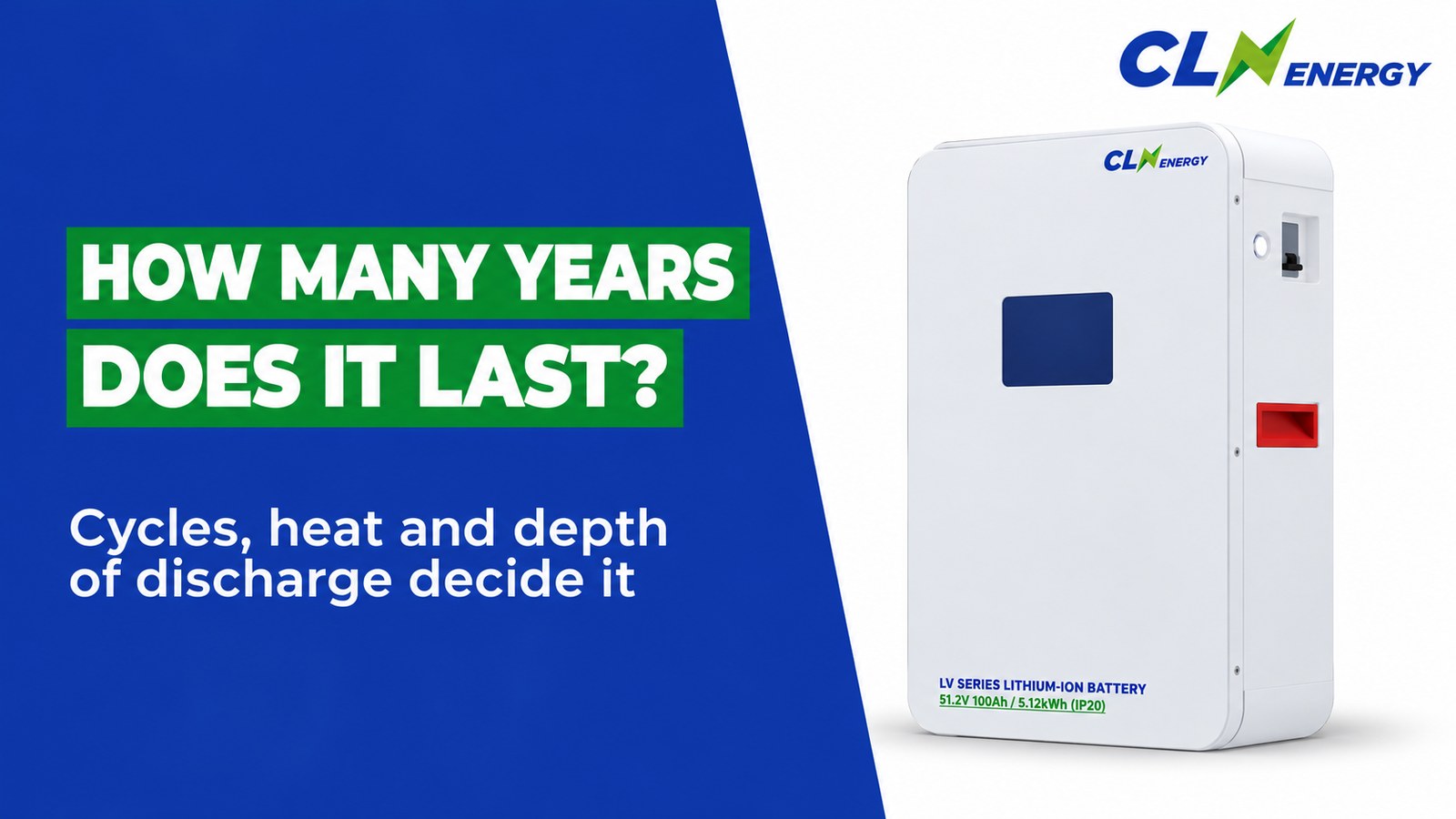
The pack carries a 36-month warranty, and cycle life is stated on the datasheet for the specific model - ask us for the figure on the pack you are considering. Cycle life is the number that matters commercially rather than the price on the invoice, because on a vehicle that earns daily it decides how many times you buy a battery over the same period. The comparison worth doing is not lithium against lead-acid on purchase price but one lithium pack against the number of lead-acid sets replaced across the same years, plus the labour of topping them up and the days a vehicle was off the road. Most fleet operators already know that replacement cadence, which is usually the fastest conversation we have.
Price follows voltage, capacity and the warranty term, so it is quoted against a configuration rather than listed. The honest way to get a real number quickly is to tell us the vehicle, the daily running and how many units you need - fleet and dealer pricing is different from single-unit pricing. We do not publish a fixed price list for vehicle packs, and it is worth saying why rather than leaving it unexplained: a 51.2V 105Ah pack and a 51.2V 150Ah pack are different products for different duties, and a single figure on a page tells you nothing about which one your vehicle needs. A quote against a real configuration takes a day and is a number you can actually hold us to.
CLN e-auto (L5) batteries are 200Ah lithium iron phosphate packs at 51.2V or 60.8V, holding about 10.2 kWh and 12.2 kWh, with a 36-month warranty and an IP67 rating. The right one depends on the voltage the vehicle motor and controller are built for.
Hinglish mein poochhe jaane wale common sawaal.
Price voltage aur capacity par depend karta hai - 51.2V 105Ah aur 51.2V 150Ah ka rate alag hoga. Aap vehicle aur daily running bata dijiye, hum exact configuration ke saath quote bhej denge. Fleet aur dealer ke liye rate alag hota hai.
Ye vehicle, load aur route par depend karta hai, isliye ek fixed number batana sahi nahi hoga. Energy ke hisaab se: 51.2V 105Ah pack mein takreeban 5.4 kWh hoti hai, aur 150Ah pack mein takreeban 7.7 kWh. Aapki daily running bataiye, hum sahi capacity suggest kar denge.
LiFePO4 chemistry lijiye - safety zyada hai aur cycle life lead-acid se kaafi zyada hai. Capacity apni duty ke hisaab se chuniye: lambi shift aur heavy load ke liye 150Ah, halki city running ke liye 105Ah kaafi hai. Warranty 36 months hai, aur har model ka exact cycle figure datasheet par milta hai.
CLN Energy dealer aur distributor dono ke saath kaam karti hai. Partner application form bhariye - usme apna area, current business aur expected volume likhiye. Hamari team aapse aage ki baat karegi.
Answers to the questions buyers ask before choosing a battery, written from our own specification tables and deployments.
Make, model and daily running is enough to come back with the right pack and a price. For a fleet or a dealership, say how many and we will quote accordingly. CLN Energy is among the LFP battery manufacturers in India building L3 and L5 traction packs in-house.
Request a quote Ask on WhatsApp Become a dealer
 Become a
Partner
Become a
Partner