
By CLN Energy Limited BSE SME listed, scrip 544347 Lithium battery manufacturer, Noida Published Updated
A telecom tower in a remote part of India fails in a way few other installations do: quietly, at three in the morning, somewhere nobody visits for a week. The grid is unreliable or absent, the shelter bakes in summer, diesel has to be carried in, and every repair is a long drive. The battery sits at the centre of all of it, and the battery most sites were built with is the one that suffers most in those conditions.
This article sets out the energy problems that are specific to remote sites, what lithium iron phosphate changes about each of them, and what it does not change.
Four things make a remote telecom site hard on batteries: a weak or absent grid, heat inside the shelter, the distance somebody has to travel to reach it, and the space and weight the site can physically take.
| Problem | What it does to a lead-acid site | What lithium changes |
|---|---|---|
| Weak or absent grid | Long, frequent discharges and constant partial charging, which shortens lead-acid life | Tolerates deep and partial cycling as routine |
| Shelter heat | Life roughly halves for every 10°C above 25°C | Rated to work at 0–55°C on our telecom modules |
| Distance | Failures found on a visit; diesel and replacements carried in | Remote monitoring turns an emergency visit into a scheduled one |
| Space and weight | Large, heavy strings for the backup needed | Smaller bank for the same usable energy |
Many towers sit far from the nearest substation, on lines that fail often and for hours. The battery is not an occasional standby there; it is cycled hard and often, and between outages it is frequently left partly charged because the grid returns only long enough to top it up a little. That partial-state-of-charge pattern is exactly the one that wears lead-acid out.
A diesel generator fills the gap, but it has to be fuelled, maintained and protected, and at a remote site every one of those is a vehicle and a day. The more the battery carries, the less the generator runs.
Lead-acid is rated at 25°C and loses roughly half its design life for every 10°C above that. An unconditioned shelter at 40°C in an Indian summer is therefore consuming a four-year battery in about one, which is why so many sites are on a replacement cycle measured in months rather than years.
| Shelter temperature | Share of a lead-acid battery's design life, by that rule |
|---|---|
| 25°C | All of it |
| 35°C | About half |
| 45°C | About a quarter |
The useful question to ask of any pack is the temperature range it is rated to work in, not the range it survives. Our 48V telecom modules are rated 0 to 55°C working and 0 to 45°C in storage, and their cycle life is quoted at 25°C with the depth of discharge stated.
On a network of any size, the battery is not the expensive part. The visit is. A lead-acid string tells nobody it is degrading; it fails a load test, or it fails an outage. A lithium pack whose battery management system reports state of charge, temperature and health over RS485 or CAN tells the operator in advance, so a site is visited because its data says so rather than after it has gone down.
That was the whole point of the largest telecom deployment we have done: 22,864 packs across BSNL's network in 400Ah and 800Ah modules, each reporting to a central dashboard, with a five-year warranty and a further five-year AMC behind them. What changed was less the chemistry than the maintenance model.
Lithium iron phosphate is cycled far deeper than lead-acid as a matter of routine, so the usable energy is close to the rated energy, and a bank sized for the same backup is smaller and lighter. At a rooftop or cramped urban site that means fitting in the rack that is there; at a remote site it means fewer, lighter units to carry up the track.
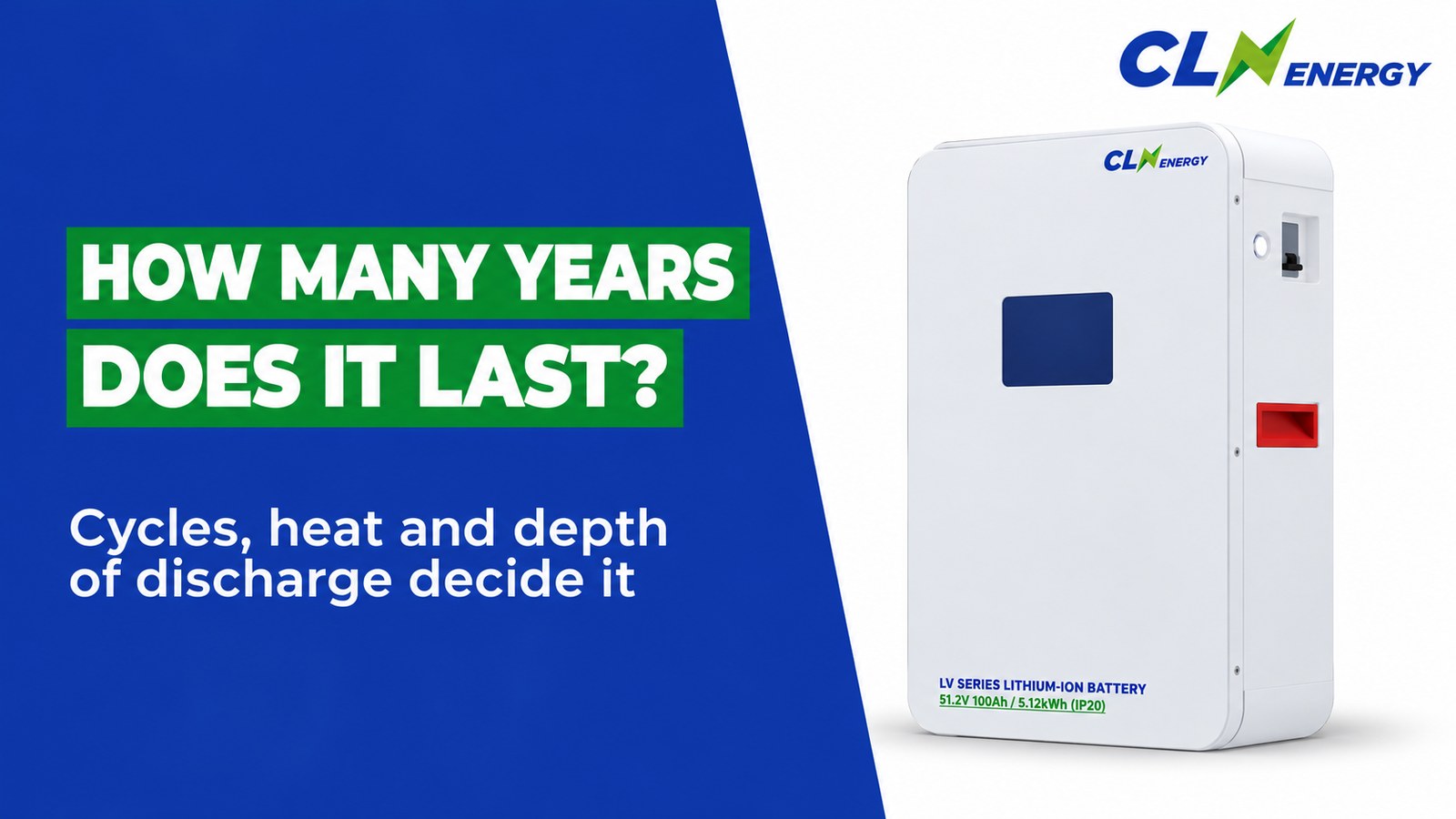
Our telecom range is two 48V modules built for the 19-inch racks beside the rectifier:
| Specification | 48V 50Ah | 48V 100Ah |
|---|---|---|
| Chemistry and cells | LFP, prismatic, 15 in series | LFP, prismatic, 15 in series |
| Format | 19-inch, 3U | 19-inch, 3U |
| Cycle life | 3,000 at 90% DOD, 25°C, 0.5C charge / 1C discharge | |
| Voltage window | 54.0 V maximum, 42.0 V minimum cut-off | |
| Working temperature | 0–55°C | |
| Communication | RS485 / CAN, master and slave for paralleled modules | |
| Size and weight | 482 × 480 × 133 mm, about 32 kg | 580 × 482 × 134 mm, about 52 kg |
| Warranty | 60 months | 60 months |
The full range and its application notes are on the telecom tower lithium battery page. To work out how many modules a site needs from its load and autonomy, sizing a telecom tower battery walks through the arithmetic.
Where there is no grid worth the name, solar is the obvious partner for the battery, and lithium suits that duty: a solar-charged bank cycles every day and is often left partly charged after a cloudy one, which is the pattern lead-acid handles worst. The design still needs care — the array has to recharge the bank in the sun the site actually gets, and the generator, if one stays, has to be the backstop rather than the daily source.
Worth saying plainly, because a site designed on over-promises fails in its first monsoon:
Mostly heat and cycling. Lead-acid is rated at 25°C and loses roughly half its design life for every 10°C above that, so a shelter at 40°C consumes a four-year battery in about one. Unreliable grid power adds deep and partial cycling on top. Lithium iron phosphate tolerates both far better, which stretches the replacement cycle from months to years.
Sometimes, and more often they reduce how much the generator runs. Where outages are short or solar is available, a correctly sized lithium bank can carry the site on its own. Where outages are long and sun is poor, the generator stays as a backstop and the battery cuts its running hours and fuel deliveries.
It depends on the model, so check the rated working range rather than a marketing figure. CLN's 48V telecom modules are rated 0 to 55°C working and 0 to 45°C in storage, with cycle life quoted at 25°C and 90% depth of discharge.
Through the battery management system. Our telecom modules report state of charge, temperature and health over RS485 or CAN to the site controller, and across BSNL's network the packs report to a central dashboard, so a failing site is identified before it drops rather than after.
Rated life is stated in cycles at a given depth of discharge: 3,000 cycles at 90% DOD, 25°C, 0.5C charge and 1C discharge for our 48V modules, which carry a 60-month warranty. How many years that becomes depends on how often the site discharges, which is why the rating matters more than a years figure.
Yes, and the duty suits them: a solar-charged bank cycles daily and is often left partly charged after cloudy days, which lithium iron phosphate handles far better than lead-acid. The array and the bank still have to be sized for the sun the site actually gets.
Standards and government figures link to the organisation that publishes them. Figures about CLN products and deployments come from our own specification tables and project records, linked here so they can be checked.

 Become a
Partner
Become a
Partner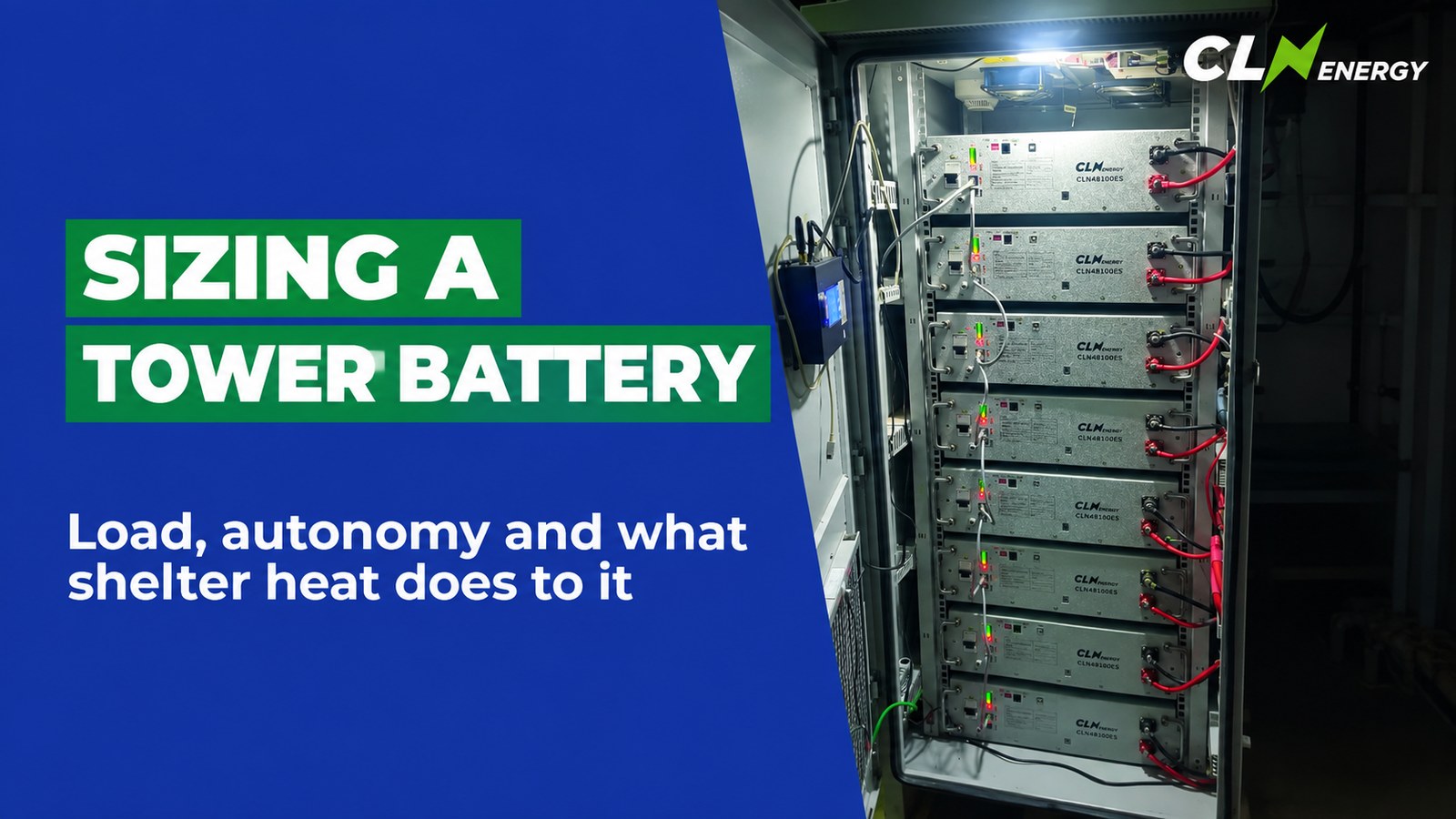


Comments: