CLN Energy makes lithium iron phosphate (LiFePO4) packs that replace 12V, 24V and 48V lead-acid batteries — at 12.8V, 25.6V and 51.2V, the lithium equivalents of each — built at the Noida plant. The swap is usually direct, but the voltage label changes and the charger often needs checking. Both are explained below, with every drop-in pack linked to its full specification.
By CLN Energy Limited BSE SME listed, scrip 544347 Lithium battery manufacturer, Noida Reviewed
A lead-acid cell is 2V; a lithium iron phosphate cell is 3.2V. So the two chemistries land on different numbers for the same job, and the lithium label always reads slightly higher. That is the single thing that confuses a replacement most often — the pack is not a different class of battery, it is the same job in a different chemistry.
| Lead-acid system | Lead-acid cells | LiFePO4 equivalent | LiFePO4 cells |
|---|---|---|---|
| 12V | 6 × 2V | 12.8V | 4 × 3.2V |
| 24V | 12 × 2V | 25.6V | 8 × 3.2V |
| 48V | 24 × 2V | 51.2V | 16 × 3.2V |
Batteries that take the place of a lead-acid battery directly. Each links to its full specification page.
| Model | Replaces | Application | Capacity | Nominal energy |
|---|---|---|---|---|
| Table Top Battery 12.8V 100Ah | 12V lead-acid | Residential | 100 Ah | 1.28 kWh |
| MHE 25.6V 200Ah Lithium-ion Battery | 24V lead-acid | MHE | 200 Ah | 5.12 kWh |
| Table Top Battery 25.6V 100Ah | 24V lead-acid | Residential | 100 Ah | 2.56 kWh |
| Wall Mounted Battery 25.6V 200Ah | 24V lead-acid | Residential | 200 Ah | 5.12 kWh |
| Ground Mounted Battery 25.6V 230Ah | 24V lead-acid | Residential | 230 Ah | 5.89 kWh |
| Ground Mounted Battery 25.6V 314Ah | 24V lead-acid | Residential | 314 Ah | 8.04 kWh |
Replacing a 48V lead-acid system? The lithium equivalent is 51.2V — every 48V and 51.2V pack, across telecom, storage, material handling and e-mobility, is on the 48V lithium battery page.
Three things, and only one of them is the battery. The voltage label rises to the lithium equivalent, as the guide above shows. The charger usually needs checking, because a lead-acid charge profile may stop a lithium pack short of full. And the maintenance goes away: lithium iron phosphate needs no topping up, and every CLN pack carries a battery management system that handles protection and cell balancing.
What usually stays the same is everything around the battery — the load it powers, and often the tray or enclosure it sits in. On telecom sites the rectifier stays as well, which is how BSNL replaced 22,864 sets in the existing cabinets. Send us the rating of the battery you are replacing and the equipment it serves, and we will confirm the pack and the charger rather than leave you to find out after installation.
In most cases, yes - 12.8V is what a 12V system becomes in lithium iron phosphate. A LiFePO4 cell is 3.2V nominal, so four in series make 12.8V, which sits where a six-cell 12V lead-acid battery sits. CLN makes a 12.8V 100Ah table-top battery for exactly this swap. Two things to confirm before you assume it drops straight in: that the charger can deliver a lithium charge profile, and that the equipment is happy with a slightly higher resting voltage. Send us the existing battery rating and the equipment it powers and we will confirm rather than guess.
Often, and it is the step people most commonly skip. A lead-acid charger follows a charge profile built for lead-acid chemistry, and on a lithium pack it may stop short of a full charge or hold a float voltage the battery does not need. Every CLN pack carries a battery management system that protects the cells, so a mismatched charger is more likely to leave capacity unused than to cause damage - but you are paying for capacity you then never get. Tell us the charger you have and we will say whether it suits, or which one does.
The 25.6V packs. Eight LiFePO4 cells at 3.2V make 25.6V, the lithium equivalent of a 24V lead-acid bank of twelve two-volt cells. CLN makes a 25.6V 100Ah table-top battery and a 25.6V 200Ah pack for material handling equipment such as forklifts and stackers, where lead-acid traction batteries are the incumbent. For 48V systems the lithium equivalent is 51.2V, and every 48V and 51.2V pack is listed on the 48V lithium battery page. Each product links to its own specification page with the full technical table.
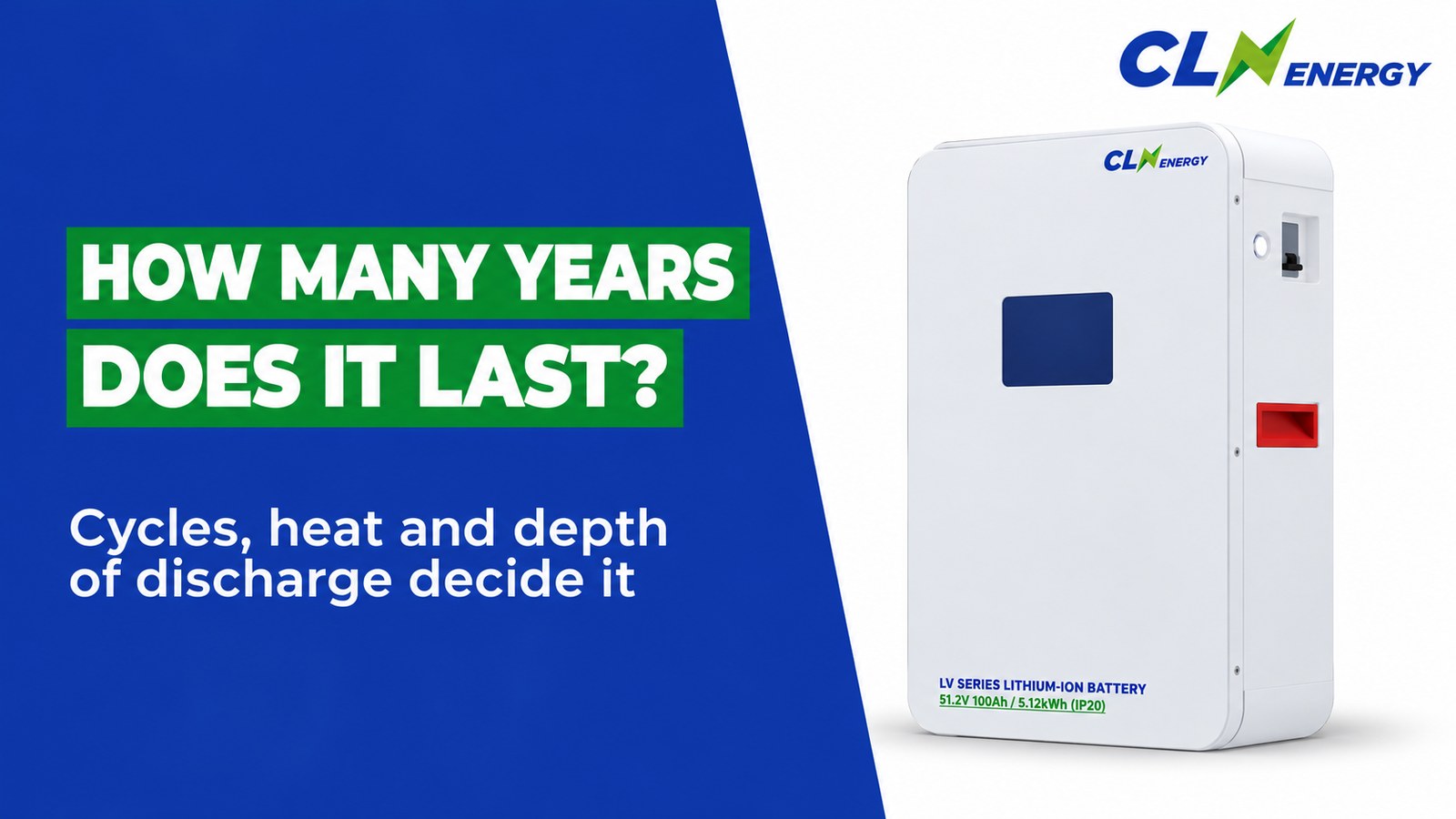
It depends on how hard the battery works. The case is strongest where a battery cycles every day - a vehicle, a forklift, a backup system that sees frequent outages - because there the number of times you replace the battery over the same years matters more than the price of one. Lithium iron phosphate also needs no topping up and carries a battery management system, which removes two common ways a lead-acid set is quietly ruined. For a battery that sits idle and is rarely discharged, the case is weaker. Cycle life is stated on each CLN model datasheet; ask for the figure on the pack you are considering.
Usually, yes. Match the voltage first - a 12V inverter takes a 12.8V pack, a 24V inverter takes 25.6V and a 48V inverter takes 51.2V - then set the inverter's battery type to lithium if it has that option, so it charges the pack fully. Size the battery on the load you keep running during an outage rather than on the inverter's VA rating. Our guide "Can I use a lithium battery in a normal inverter?" on the blog walks through all three steps with the arithmetic.
No. Lithium iron phosphate and lead-acid charge to different voltages and behave differently as they empty, so connected together the charger cannot look after either one - one is undercharged, the other overcharged or left unused. Replace the lead-acid battery or set outright rather than adding a lithium pack beside it, and replace a lead-acid bank as a whole rather than one block at a time.
Replacing a lead-acid battery or bank with a lithium iron phosphate pack of the matching voltage - 12.8V for 12V, 25.6V for 24V, 51.2V for 48V - and making sure the charger or inverter charges it on a lithium profile. A conversion kit is usually the pack plus a suitable charger. The equipment itself normally stays as it is.
Not with the packs on this page. A car starter battery is designed to deliver a short, very high burst of current to crank the engine, while CLN packs are deep-cycle batteries built to deliver energy steadily over hours - for inverters, solar, electric vehicles and backup systems. For a car, use a starter battery specified by the vehicle manufacturer.
For a home UPS - which in India is an inverter with a battery - usually yes: match the voltage, set the battery type to lithium if the unit offers it, and size the pack on your load. A small computer UPS with a sealed battery built in is not designed for a lithium replacement. A data centre UPS needs a battery matched to its DC bus voltage and discharge rate, which is what our data-centre series is built for.
Answers to the questions buyers ask before choosing a battery, written from our own specification tables and deployments.
The voltage and capacity of the old battery, and what it powers, is enough to come back with the right pack and whether your charger suits it. CLN Energy is a battery manufacturer in India and builds the replacement packs at its Noida plant.
Request a quote Ask on WhatsApp 48V and 51.2V packs
 Become a
Partner
Become a
Partner