CLN Energy manufactures 9 lithium iron phosphate (LiFePO4) products at 48V and 9 more at 51.2V — telecom rack modules, stackable and wall-mounted storage, material handling, e-rickshaw, e-auto and golf cart packs — all built at the Noida plant. Every one has its own specification page, linked from the tables below.
By CLN Energy Limited BSE SME listed, scrip 544347 Lithium battery manufacturer, Noida Reviewed
A LiFePO4 cell is 3.2V, so sixteen of them make 51.2V. That is what a four-block 48V lead-acid system becomes when it moves to lithium, which is why most e-rickshaw, e-auto and home-storage buyers searching “48V” actually want the 51.2V table below. Equipment built around a 48V nominal bus from the start — telecom above all — takes the 48V table. The two are kept separate on purpose. If you are not sure which your equipment expects, send us the model and we will tell you.
| Model | Application | Capacity | Nominal energy |
|---|---|---|---|
| Stackable Battery 48V100Ah | Commercial and Industrial | 100 Ah | 4.8 kWh |
| Standalone 48V100Ah | Commercial and Industrial | 100 Ah | 4.8 kWh |
| Stackable Battery System 48V200Ah | Commercial and Industrial | 200 Ah | 9.6 kWh |
| Stackable Battery System 48V300Ah | Commercial and Industrial | 300 Ah | 14.4 kWh |
| Stackable Battery System 48V400Ah | Commercial and Industrial | 400 Ah | 19.2 kWh |
| MHE Lithium-ion Battery 48V 400Ah | MHE | 400 Ah | 19.2 kWh |
| Wall Mounted Battery 48V 100Ah | Residential | 100 Ah | 4.8 kWh |
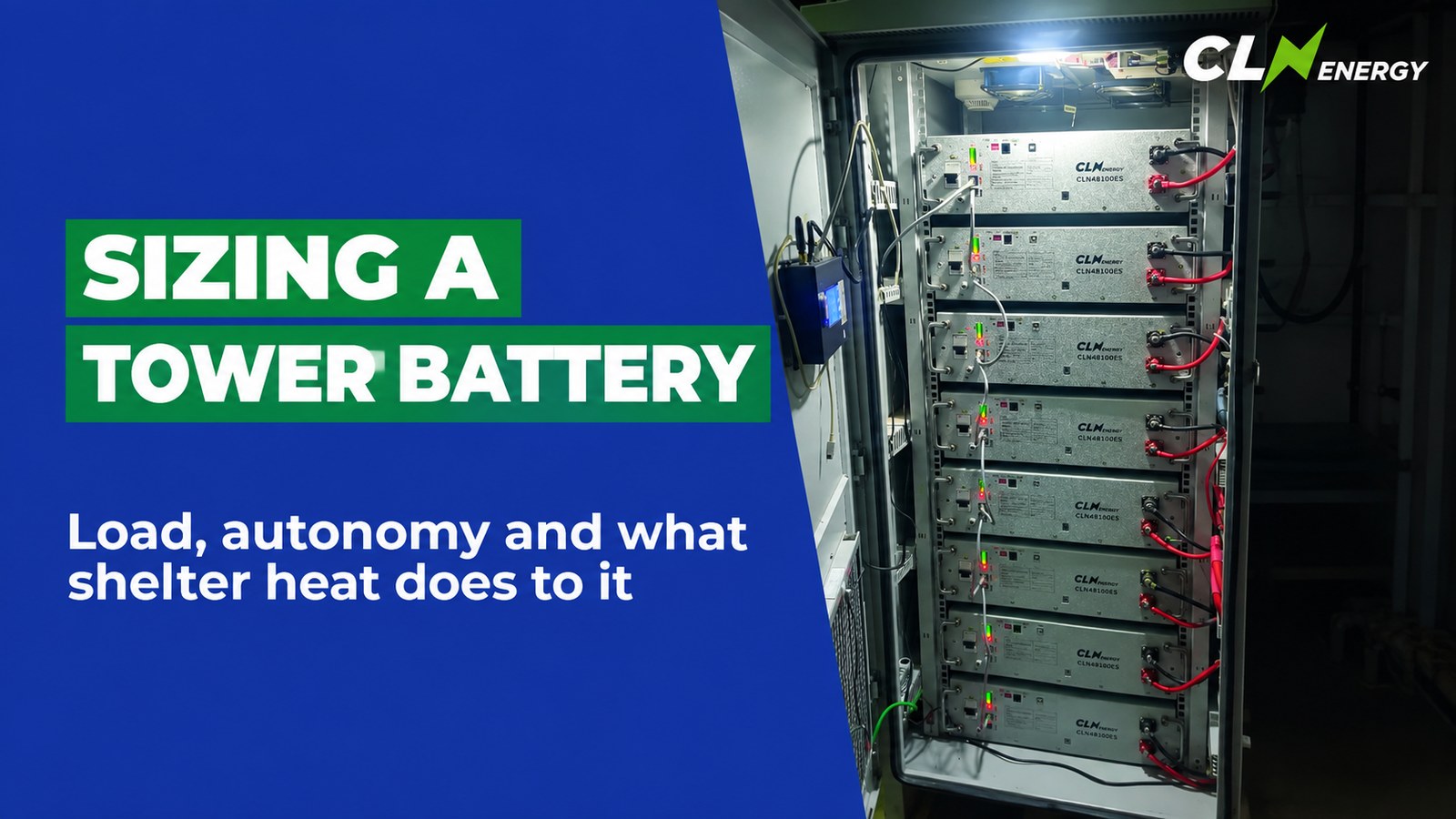
| 48V50Ah | Telecom | 50 Ah | 2.4 kWh |
| 48V100Ah | Telecom | 100 Ah | 4.8 kWh |
| Model | Application | Capacity | Nominal energy |
|---|---|---|---|
| E-Auto Batteries 51.2V 200Ah | E-Auto (L5) | 200 Ah | 10.2 kWh |
| Lithium-ion batteries 51.2V 105Ah | E-Rickshaw (L3) | 105 Ah | 5.4 kWh |
| Lithium-ion batteries 51.2V 125Ah | E-Rickshaw (L3) | 125 Ah | 6.4 kWh |
| Lithium-ion batteries 51.2V 140Ah | E-Rickshaw (L3) | 140 Ah | 7.2 kWh |
| Lithium-ion batteries 51.2V 150Ah | E-Rickshaw (L3) | 150 Ah | 7.7 kWh |
| Golf Cart 51.2V 105Ah Batteries | Golf Cart | 105 Ah | 5.4 kWh |
| Wall Mounted Battery 51.2V 100Ah | Residential | 100 Ah | 5.1 kWh |
| Ground Mounted Battery 51.2V 230Ah | Residential | 230 Ah | 11.8 kWh |
| Ground Mounted Battery 51.2V 314Ah | Residential | 314 Ah | 16.1 kWh |
More on the e-mobility packs on the e-rickshaw and e-auto page, and on the 48V rack modules on the telecom tower battery page.
Mostly the chemistry of the system they came from. A lithium iron phosphate (LiFePO4) cell is 3.2V nominal, so sixteen cells in series make 51.2V - which is the lithium equivalent of a four-block 48V lead-acid set. That is why e-rickshaw, e-auto and many storage systems that were designed around 48V now run on 51.2V packs. Separately, some equipment is specified at a 48V nominal bus from the start, telecom being the clearest case, and CLN builds for that too. This page lists both, labelled, so you can pick the one your equipment actually expects rather than the number that sounds right.
About 4.8 kWh nominal - voltage multiplied by amp-hours, 48 x 100 = 4,800 Wh. A 51.2V 100Ah pack holds about 5.1 kWh by the same arithmetic. Nominal energy is not the same as usable energy: how much you can actually draw depends on the depth of discharge the pack is configured for and the cutoff of the equipment it is connected to. So use the nominal figure to compare packs with each other, and ask for the usable figure when you are sizing a real load. Every CLN 48V and 51.2V product on this page has its own specification page with the full technical table.
Nine products at a 48V nominal rating, and six more at 51.2V. At 48V: 50Ah and 100Ah telecom rack modules, a stackable range from 100Ah to 400Ah, a standalone 100Ah unit, a wall-mounted 100Ah battery, and a 400Ah pack for material handling equipment. At 51.2V: e-rickshaw packs in 105Ah, 125Ah and 150Ah, a 200Ah e-auto pack, a 105Ah golf cart pack and a 100Ah wall-mounted battery. All of them are lithium iron phosphate and all are built at the Noida plant. Each links to its own specification page from the tables above.
Usually, and it is one of the most common reasons buyers contact us - but check two things before assuming. First, voltage: a 48V lead-acid system is normally replaced by a 51.2V LiFePO4 pack, not a pack labelled 48V. Second, the charger or rectifier: it has to suit a lithium charge profile, or the pack will not charge fully or the BMS will cut in. On telecom sites the rectifier usually stays as it is, which is how the BSNL programme replaced 22,864 sets in the existing cabinets. Send us the existing setup and we will confirm the right pack rather than guess.
It is rated in cycles at a stated depth of discharge, and the figure differs by product. CLN 48V telecom modules are rated at 3,000 cycles at 90% depth of discharge, 25C, and the 48V stackable range at 6,000 cycles at 95% depth of discharge, both with a 60-month warranty. How many years that becomes depends on how often the battery is discharged: a site with daily outages uses cycles far faster than one that sees a few a month. Ask for the cycle figure with its test conditions on the exact model you are considering.
Only where the product is designed for it, and then it is how capacity is added. CLN 48V telecom modules use a master and slave arrangement between their battery management systems, so paralleled modules share the load and report as one bank, and the 48V stackable range builds from 100Ah up to 400Ah - 4.8 to 19.2 kWh - by adding modules. Connecting packs that are not designed to run together leaves them unbalanced and unprotected, so ask how many modules a product supports and whether a new module can join ones already in service.
A 51.2V lithium iron phosphate battery is sixteen cells in series. On CLN 51.2V packs the maximum cut-off voltage is 57.6V and the minimum cut-off 44.8V - 3.6V and 2.8V per cell - with the charging voltage set just below the maximum. Because LiFePO4 voltage stays almost flat across most of the discharge, voltage is a poor guide to how full the battery is; read the state of charge from the battery management system instead.
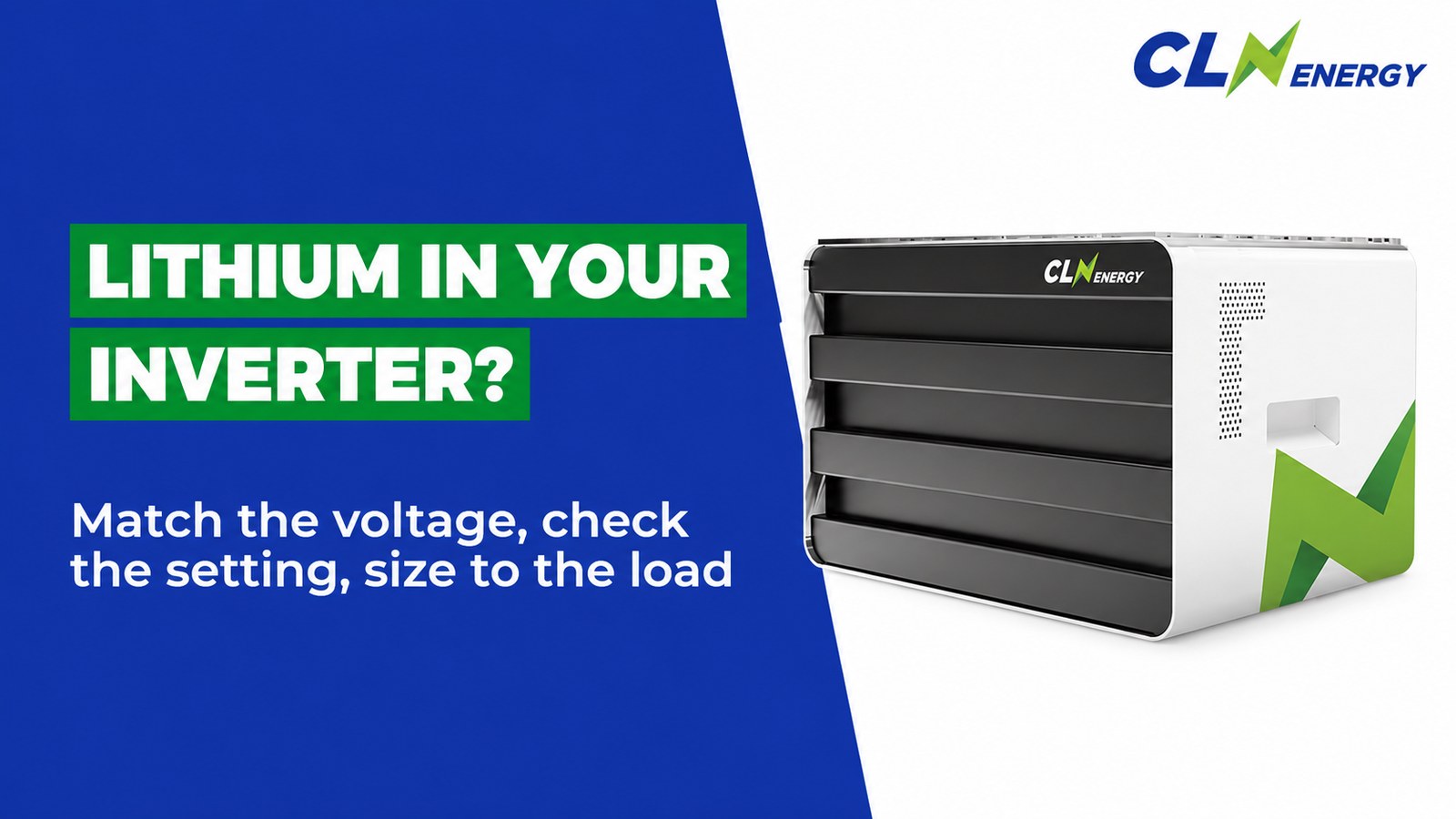
Yes, with a 48V inverter that can charge a lithium profile. A 48V inverter takes a 48V or 51.2V lithium pack; set its battery type to lithium if it has the option, and size the pack on the load you keep running in an outage. CLN wall-mounted, ground-mounted and stackable 48V and 51.2V batteries are built for inverter and solar use.
Answers to the questions buyers ask before choosing a battery, written from our own specification tables and deployments.
Tell us the equipment and the load, and we will point you at the right pack and send a quote against it. The packs are built in-house — CLN Energy is a lithium battery manufacturer with its own plant in Noida.
Request a quote Ask on WhatsApp See the certifications
 Become a
Partner
Become a
Partner