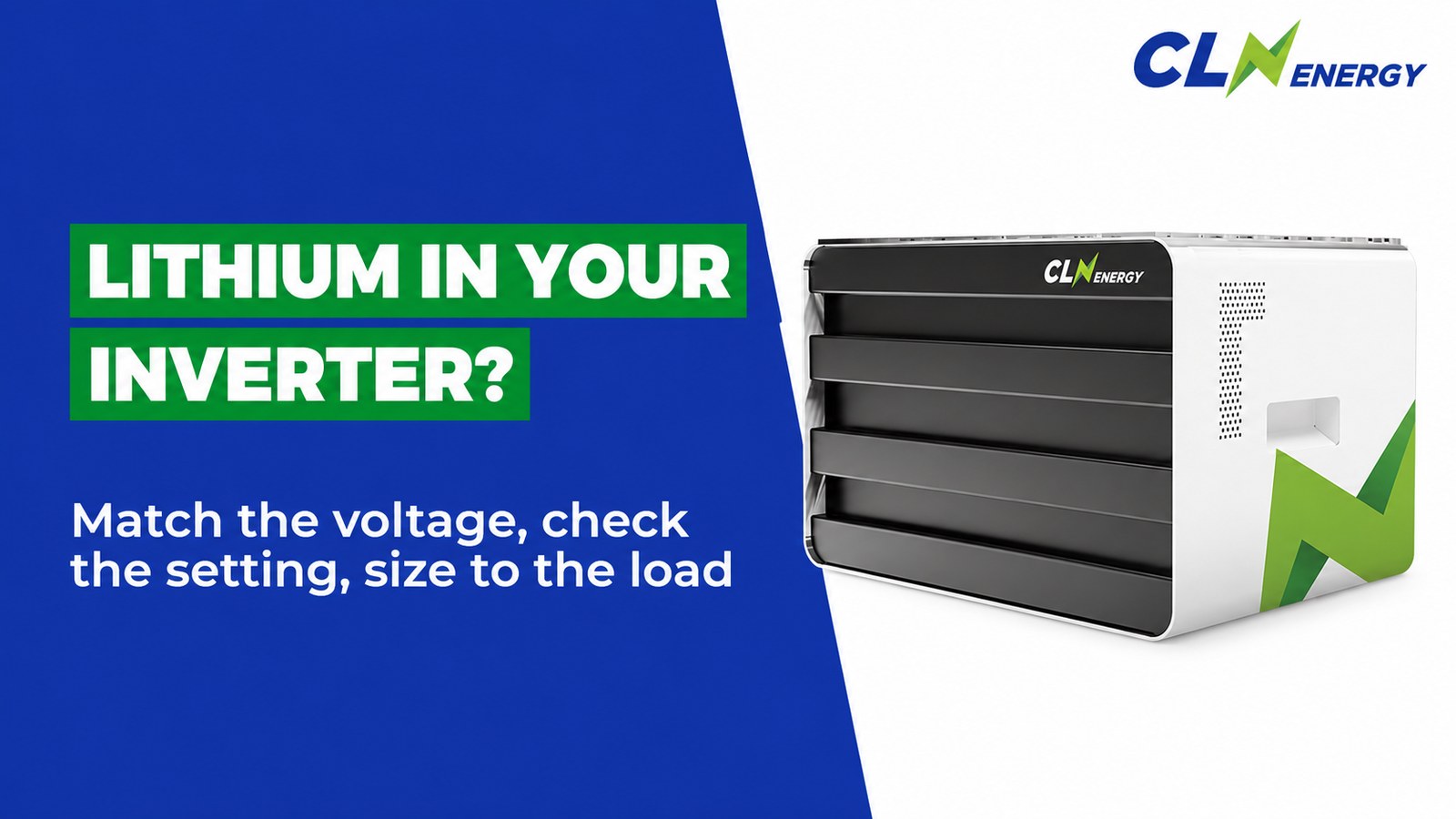
A lithium iron phosphate (LiFePO4) pack replaces the tubular battery under your normal home inverter, and in most homes the inverter, the wiring and the place it stands all stay as they are. Match the pack to the inverter's battery voltage — 12.8V for a 12V inverter, 25.6V for 24V, 48V or 51.2V for 48V — then size the capacity to the load you want through an outage. CLN Energy builds every pack at its own plant in Noida.
By CLN Energy Limited BSE SME listed, scrip 544347 Lithium battery manufacturer, Noida Reviewed
The only number that has to match is the inverter's battery voltage. A lithium iron phosphate cell is 3.2V where a lead-acid cell is 2V, so the lithium label always reads a little higher for the same job: four cells make 12.8V, eight make 25.6V, sixteen make 51.2V. If you know what the battery you are replacing is rated at, you know which row you are in.
| Model | Voltage | Capacity | Nominal energy | Format |
|---|---|---|---|---|
| Table Top Battery 12.8V 100Ah | 12.8V | 100 Ah | 1.28 kWh | Inverter Batteries |
| Model | Voltage | Capacity | Nominal energy | Format |
|---|---|---|---|---|
| Table Top Battery 25.6V 100Ah | 25.6V | 100 Ah | 2.56 kWh | Inverter Batteries |
| Wall Mounted Battery 25.6V 200Ah | 25.6V | 200 Ah | 5.12 kWh | Inverter Batteries |
| Ground Mounted Battery 25.6V 230Ah | 25.6V | 230 Ah | 5.89 kWh | Inverter Batteries |
| Ground Mounted Battery 25.6V 314Ah | 25.6V | 314 Ah | 8.04 kWh | Inverter Batteries |
| Model | Voltage | Capacity | Nominal energy | Format |
|---|---|---|---|---|
| Wall Mounted Battery 48V 100Ah | 48V | 100 Ah | 4.8 kWh | Inverter Batteries |
| Wall Mounted Battery 51.2V 100Ah | 51.2V | 100 Ah | 5.12 kWh | Inverter Batteries |
| Ground Mounted Battery 51.2V 230Ah | 51.2V | 230 Ah | 11.78 kWh | Inverter Batteries |
| Ground Mounted Battery 51.2V 314Ah | 51.2V | 314 Ah | 16.08 kWh | Inverter Batteries |
Not sure your inverter will take lithium? The step-by-step guide, can I use a lithium battery in a normal inverter, covers the voltage, the charge setting and backup hours by load. Replacing a tubular battery specifically? The lead-acid to lithium page covers the swap and the voltage guide. Adding solar at the same time? Solar batteries and inverters sets out on-grid, hybrid and off-grid.
Size the battery on the load you actually keep running in an outage, not on the inverter's VA badge. Multiply the watts by the hours you want them, then allow for depth of discharge.
Say four fans, six lights and a television — around 400 watts — for four hours. That is 1.6 kWh. A 12.8V 100Ah pack holds 1.28 kWh nominal, and at 80% depth of discharge delivers about 1.02 kWh, so that load wants two of them, or a 25.6V pack on a 24V inverter. Add a refrigerator at roughly 150 watts average and you are at 2.2 kWh for the same four hours. Inverter losses come out of the margin, so round up rather than down.
The same arithmetic runs backwards: if you know the pack, divide its usable energy by the load to get the hours. Tell us the appliances and the hours and we will size it against that rather than against a category.
Three things change. The voltage label reads higher, as the table above shows. The charge setting usually needs checking, because a lead-acid profile can stop a lithium pack short of full. And the maintenance goes away: lithium iron phosphate needs no topping up, has no terminals to corrode, and every CLN pack carries a battery management system that handles protection and cell balancing, so the failure mode where a set is quietly ruined over months is designed out.
What usually stays is everything else — the inverter, the wiring, the load it carries. The packs are built to standard form factors, so a table-top model generally stands where the old battery stood; a wall-mounted pack frees the floor instead. If you would rather replace the whole arrangement with one box, the all-in-one units pair an inverter, an MPPT solar charger and the battery together.
Usually yes, provided two things line up: the voltage and the charge profile. Voltage first - a 12V inverter takes a 12.8V lithium pack, a 24V inverter takes 25.6V, and a 48V inverter takes 48V or 51.2V. The numbers read higher because a lithium iron phosphate cell is 3.2V against a lead-acid cell at 2V, not because the pack is a different size. Then the charger: most home inverters in India were installed with tubular batteries and charge to a lead-acid profile, which on a lithium pack tends to stop short of a full charge. Every CLN pack carries a battery management system, so the usual result is capacity you paid for and never get rather than damage. Many inverters have a battery-type setting that solves it. Send us the make, model and the battery you are replacing and we will confirm rather than guess.
The VA rating tells you what the inverter can drive, not what battery it needs - that comes from the load you actually run and for how long. An 850VA or 1kVA home inverter is almost always a 12V machine, so the battery is a 12.8V pack; a 1.5kVA to 2kVA unit is usually 24V and takes 25.6V. For capacity, multiply the real load by the hours you want: 400 watts of fans, lights and a television for four hours is 1.6 kWh, and a 12.8V 100Ah pack holds 1.28 kWh nominal. Two of those, or a 25.6V pack on a 24V inverter, covers it with margin. Size on the load you keep running in an outage, not on the inverter badge.
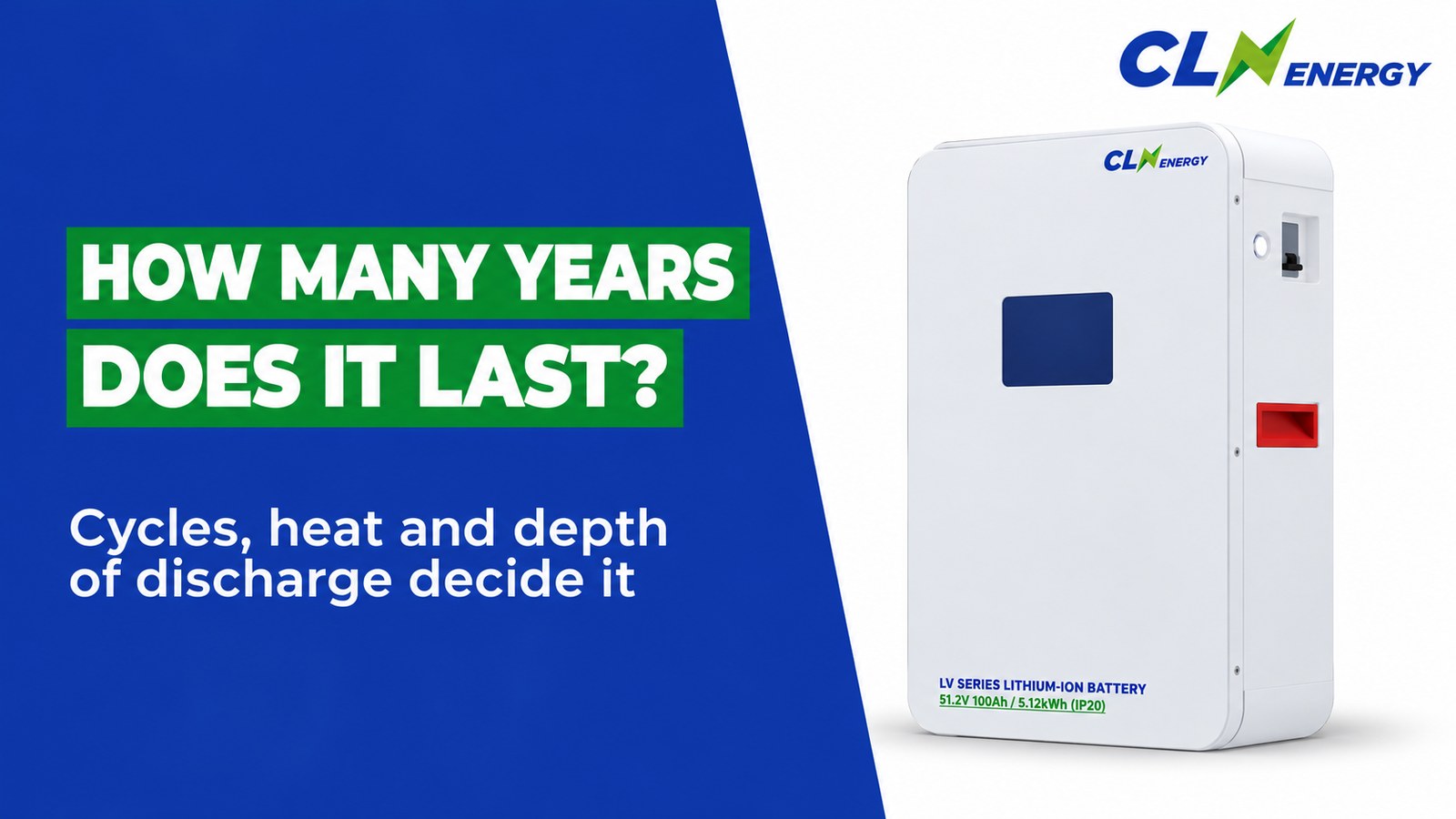
Cycle life is stated per model - the table-top packs are rated at 3,000 cycles at 95% depth of discharge, and the wall and ground-mounted packs at 6,000 - with a five-year warranty on the residential range. A home inverter battery cycles roughly once a day where outages are routine and far less where they are not, so the rating is what decides how many times you buy a battery over the same years. Two things worth separating: cycle life is an engineering rating measured at a stated depth of discharge, and the depth matters as much as the number, because the same pack cycled shallower lasts longer. Warranty is a commercial term and a shorter one.
Usually not. The pack replaces the battery and the rest of the installation stays as it is - the same inverter, the same wiring, often the same corner of the room. What changes is the charge setting, and on some older inverters that setting does not exist. Where the inverter cannot charge a lithium profile, two routes work: an inverter with a lithium setting, or a CLN all-in-one unit that puts the inverter, an MPPT solar charger and the battery in one box. The all-in-one is worth considering if solar is on the list anyway, and the solar page sets out that choice.
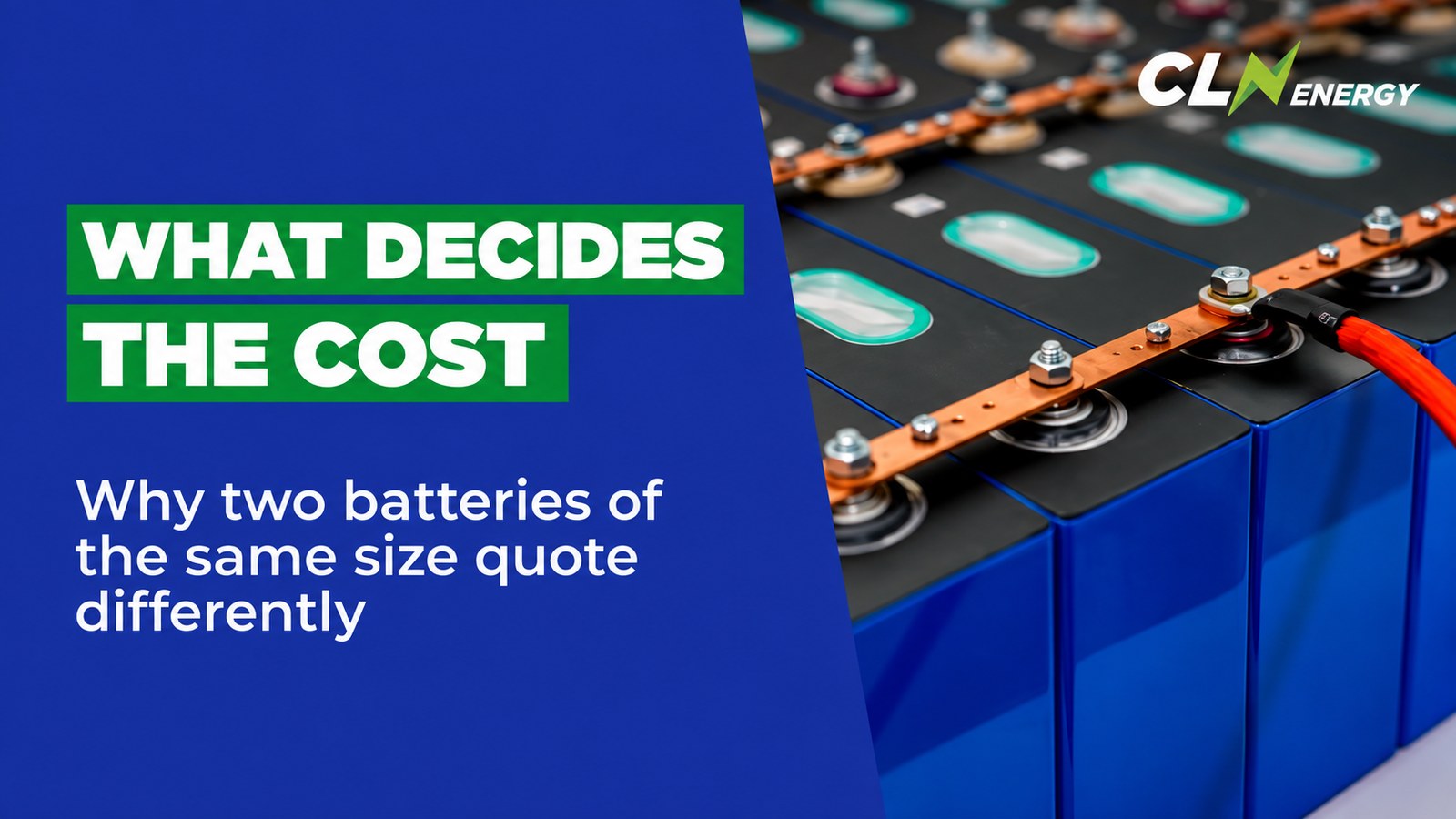
Price follows the voltage, the capacity and the warranty term, so it is quoted against a configuration rather than published as a list. What is worth comparing is not the invoice against a tubular battery, but one lithium pack against the number of batteries replaced over the same years, plus the topping up and the days without backup in between. Most households already know that replacement cadence. Tell us the inverter, the load you want to keep running and for how long, and we will come back with the pack and a price rather than a range.
Answers to the questions buyers ask before choosing a battery, written from our own specification tables and deployments.
The inverter make and model, the battery you are replacing, and what you want running through an outage. That is enough for us to name the pack and quote it. CLN Energy is a lithium ion battery company and makes these packs at its Noida plant.
Request a quote Ask on WhatsApp Replacing lead-acid
 Become a
Partner
Become a
Partner