
By CLN Energy Limited BSE SME listed, scrip 544347 Lithium battery manufacturer, Noida Published Updated
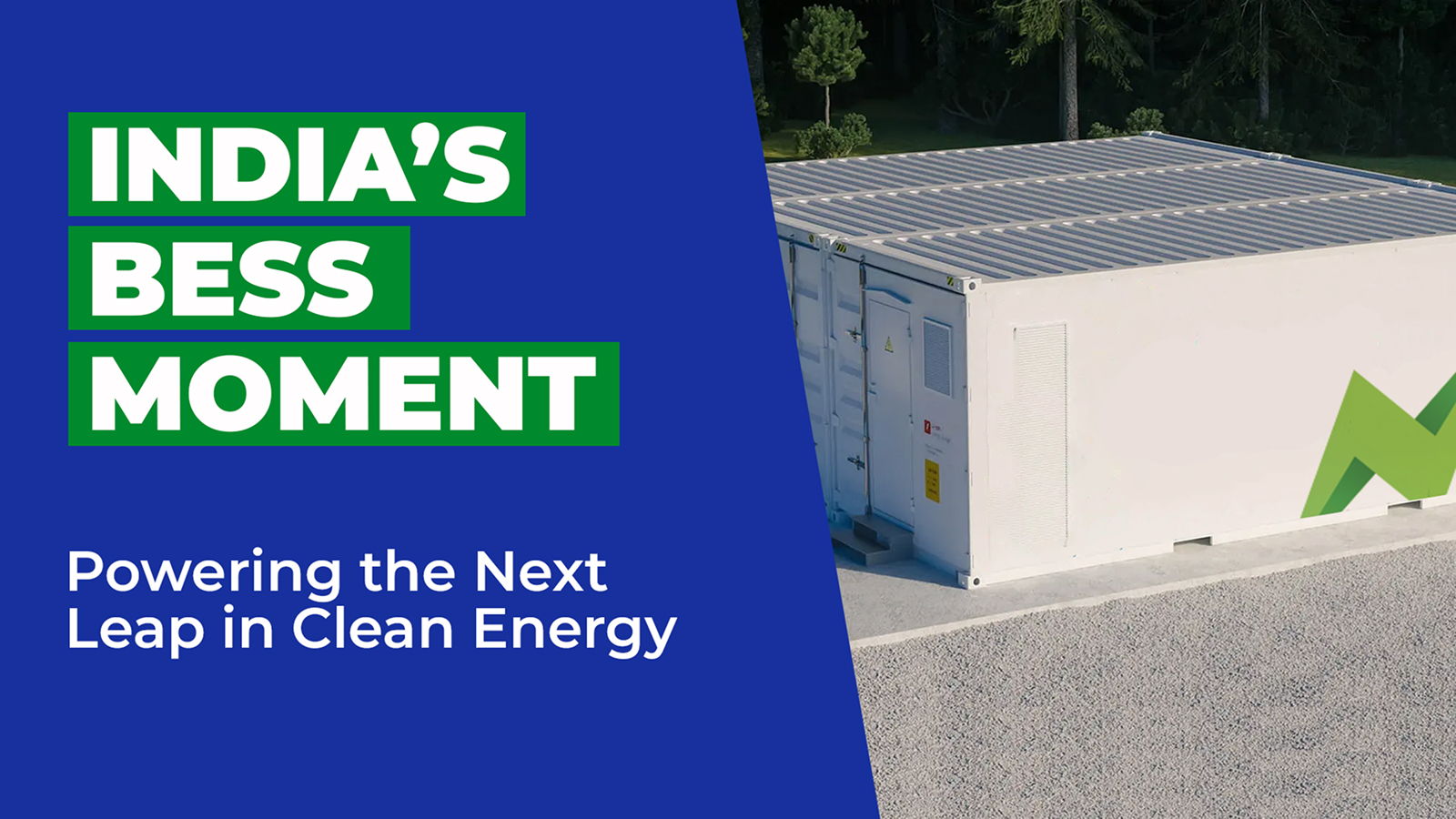
India is adding solar and wind faster than almost any country, and that creates a problem the panels cannot solve on their own: the sun sets in the evening, exactly when demand peaks. Without somewhere to put daytime energy, a grid full of renewables still leans on coal and gas after dark. Battery energy storage systems — BESS — are how that gap is closed, and they are moving from pilot projects to national planning.
This article covers what BESS actually does, how much of it India's own planners say the country needs, what is driving it, and where it fits for a grid operator, a factory, an institution and a home.
A BESS is a bank of batteries with the power electronics to charge and discharge it and an energy management system deciding when. Its value comes from moving energy in time and responding faster than any generator can:
The Central Electricity Authority's National Electricity Plan, notified in 2023, sets out the storage the grid will need as renewables grow. These are its figures:
| Year | Battery storage (BESS) | All energy storage, including pumped hydro |
|---|---|---|
| 2026–27 | 8.68 GW / 34.72 GWh | 16.13 GW / 82.37 GWh |
| 2031–32 | 47.24 GW / 236.22 GWh | 73.93 GW / 411.4 GWh |
Two things stand out. Battery storage grows nearly sevenfold in five years. And by 2031–32 batteries are planned to hold more energy than pumped hydro, which for decades was the only storage that operated at grid scale.
Four things: the 500 GW non-fossil target, which is only usable if energy can be delivered when it is needed; tenders that ask for power at fixed hours or around the clock; Viability Gap Funding of up to 40% of capital cost for the first 4,000 MWh; and commercial demand charges and time-of-day tariffs.
Five kinds of buyer, five formats. Grid and utility take containerised megawatt-hour systems; factories and commercial buildings take liquid-cooled cabinets; schools, hospitals and institutions take rack and ground-mounted banks; telecom and data centres take 19-inch modules; homes take wall-mounted and stackable packs.
| Buyer | Main job | Typical format |
|---|---|---|
| Grid and utility | Time-shifting renewables, frequency support | Containerised systems, megawatt hours |
| Factories and commercial buildings | Peak shaving, backup, less diesel | Liquid-cooled cabinets, hundreds of kWh |
| Schools, hospitals, institutions | Backup with solar | Rack and ground-mounted banks, tens of kWh |
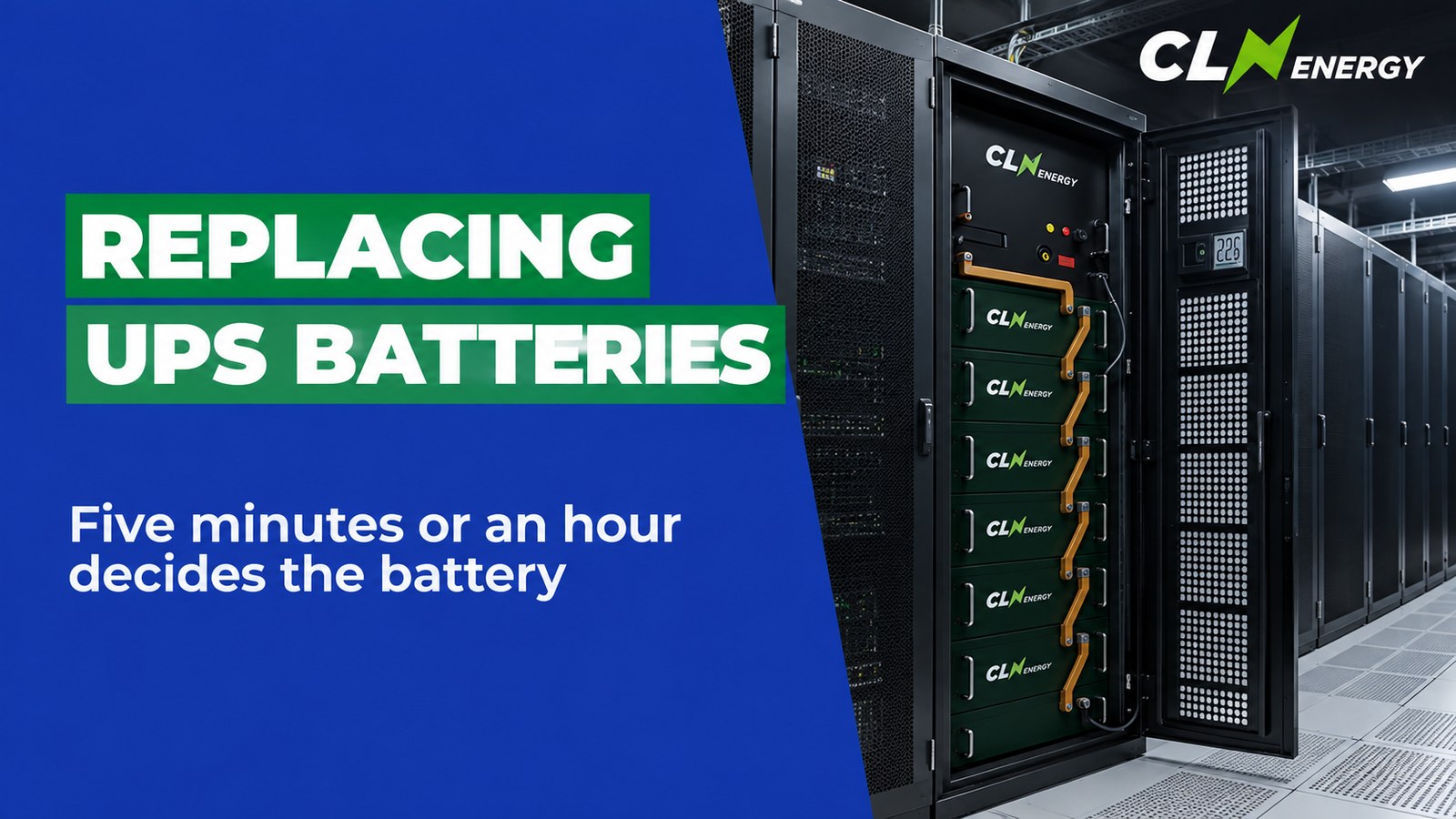
| Telecom and data centres | Uninterrupted backup | 19-inch modules, UPS battery cabinets |
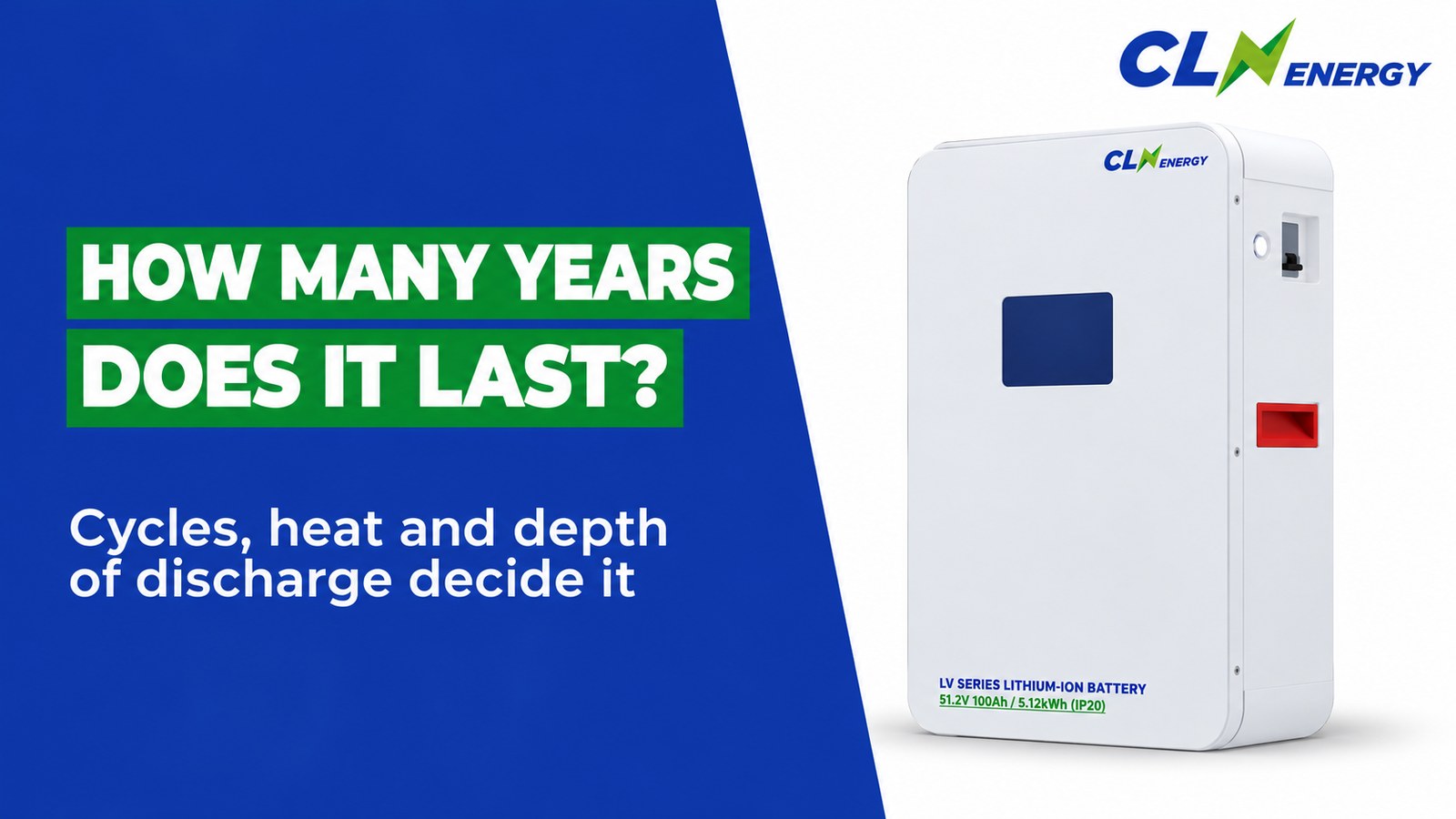
| Homes | Backup and rooftop solar | Wall-mounted, stackable and all-in-one units |
What a system of each kind costs to budget for, and how long it takes to pay back, is set out on the energy storage site: what a BESS costs in India gives approximate per-kWh ranges by system scale, and the payback period for commercial BESS shows where the money comes back from.
CLN Energy builds lithium iron phosphate storage at its Noida plant across that whole span:
| Range | Size | Warranty |
|---|---|---|
| Stackable BESS (48V) | 4.8, 9.6, 14.4 and 19.2 kWh; 6,000 cycles at 95% DOD | 60 months |
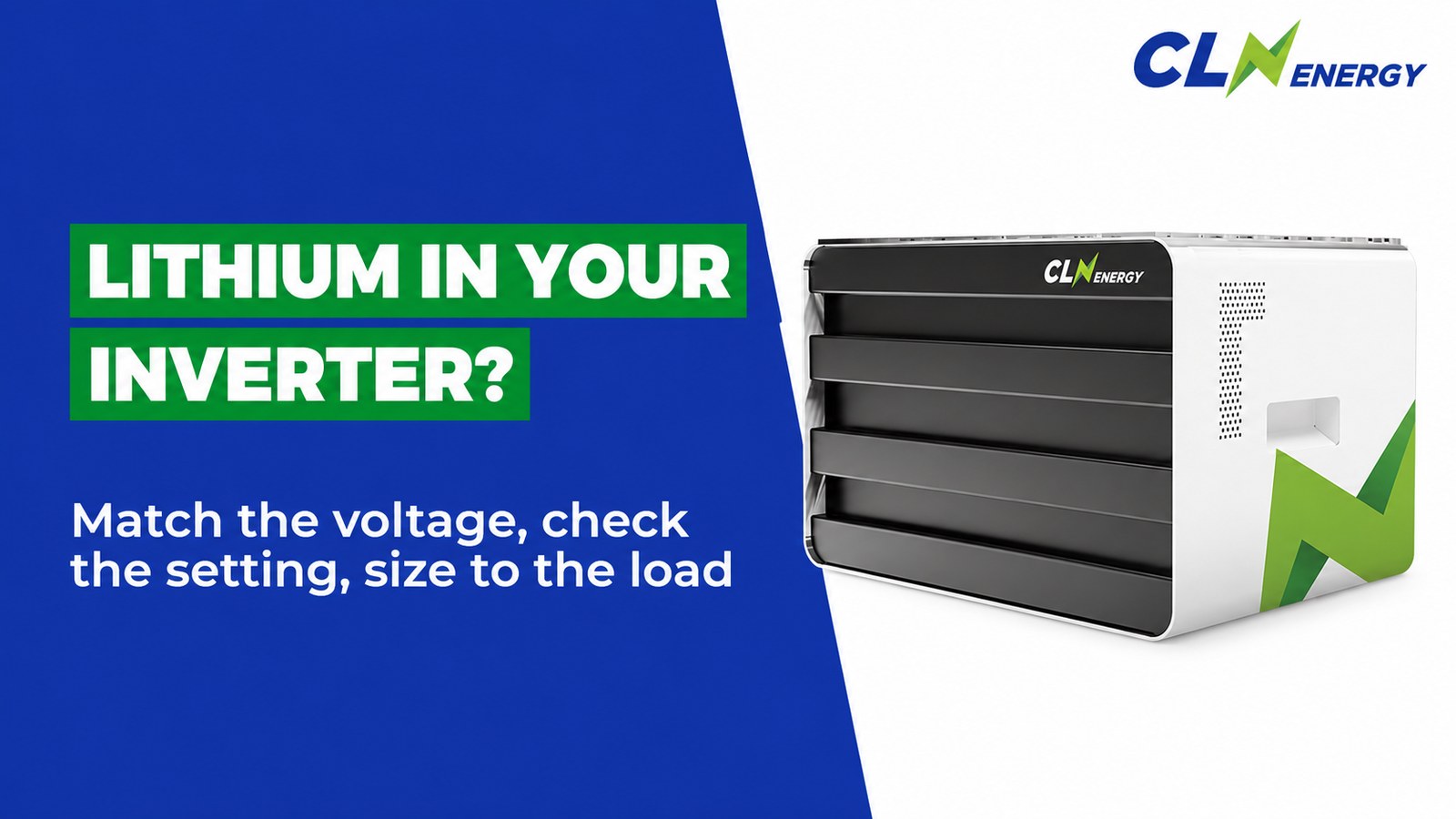
| Stackable All-in-One | 5 kW inverter with 10, 15 or 20 kWh | 5 years |
| Liquid-cooled C&I cabinets | 100 kW / 215 kWh and 250 kW / 464 kWh | 84 months |
| Containerised BESS | 1, 2 and 3 MWh in 20-foot containers; 5 MWh liquid-cooled on 314Ah cells | 120 months |
Commercial, industrial and grid-scale storage — sizing, cost and the diesel and UPS replacement cases — is set out on our energy storage site, which is the place to start for a project of that size.
Three CLN installations, each with its own project page: a 69 kWh bank behind a 20 kW hybrid inverter at a government school in Ballia for UP NEDA, a solar microgrid serving six villages in Nagaland, and a 225 kWh / 120 kW hybrid system for Greaves that repeats from site to site without being redesigned.
Sizing comes before shopping: how to size battery storage for a commercial building works through the arithmetic, and the energy storage ROI calculator takes your own tariff and load and returns the payback for your case.
Capacity in kilowatt hours is the easy number to compare, and the least informative. Power against energy, C-rate, cycle life at a stated depth of discharge, cooling, fire testing and who owns the energy management system decide how a system performs for ten years. Choosing a BESS supplier in India sets out those checks one by one.
A BESS is a bank of rechargeable batteries — today almost always lithium iron phosphate for stationary use — combined with the inverters that charge and discharge it and an energy management system that decides when. It stores electricity when it is cheap or plentiful and delivers it when it is needed, and it can respond to grid disturbances far faster than a generator.
BESS stands for Battery Energy Storage System: batteries, the power electronics that charge and discharge them, and the controls that decide when, supplied and installed as one system.
In a solar installation, the BESS is the battery that stores solar energy produced during the day so it can be used in the evening, at night or during an outage. On a large solar plant it lets the plant deliver power at the hours the grid needs it; on a rooftop it lets a home or business use more of its own solar instead of exporting it or losing it.
Because solar produces most in the middle of the day and demand peaks in the evening. As renewables grow toward the 500 GW non-fossil target, energy has to be moved from when it is generated to when it is used, and the grid needs fast response to stay stable. Batteries do both.
The Central Electricity Authority's National Electricity Plan projects 8.68 GW / 34.72 GWh of battery storage by 2026–27, rising to 47.24 GW / 236.22 GWh by 2031–32. Including pumped hydro, total storage rises from 82.37 GWh to 411.4 GWh over the same period.
For grid-scale projects, yes: the Centre approved Viability Gap Funding of up to 40% of capital cost for an initial 4,000 MWh of battery storage. Support schemes change, so check the current terms for your project type before relying on them. For businesses, the case more often rests on tariffs — demand charges and time-of-day pricing — than on a subsidy.
Lithium iron phosphate dominates stationary storage. It tolerates heat better than the nickel-based lithium chemistries, has a higher thermal runaway threshold and lasts thousands of cycles, and its main drawback — lower energy for the same size — matters little in a container or a plant room.
Often, where the tariff rewards it or the site depends on diesel for backup. The case rests on how much the demand charge and time-of-day pricing cost today, how often and how long the grid fails, and whether there is solar to store. Those numbers decide the system size and the payback, and they are specific to each site.
Standards and government figures link to the organisation that publishes them. Figures about CLN products and deployments come from our own specification tables and project records, linked here so they can be checked.

 Become a
Partner
Become a
Partner

Comments: